
About the company
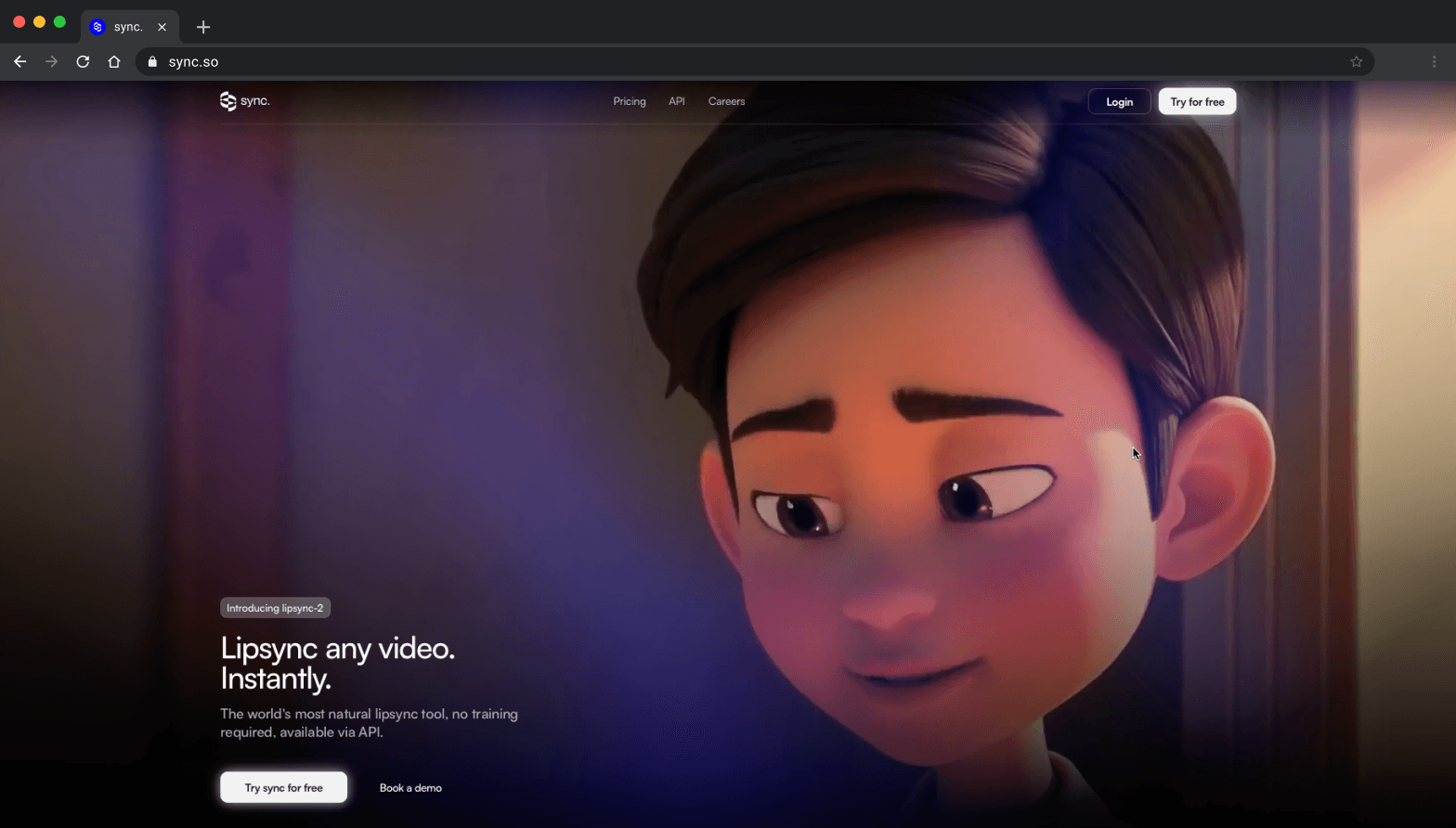
Sync is an AI research company building models to lip-sync humans in video, backed by Y Combinator and Google Ventures. With customers ranging from individual creators to enterprise media companies, they serve their technology through both an API and a studio playground interface.
“We were transitioning from a credit-based system, where you top up your account, to usage-based pricing, based on the number of generate frames with our models. We needed to start with a system to let our customers query that data easily.”
Tair Asim
Head of Product at Sync
Problem
Sync was transitioning from a credit-based system to usage-based pricing, and needed to give customers transparency into their usage - particularly important when dealing with video generation. A relational database wouldn't make sense for the append log of massive usage data they needed to handle.
As a small team of three with ClickHouse® experience, they knew it was the right technology but couldn't afford the complexity of self-hosting it.
Why Tinybird
A recommendation from a successful founder led Sync to Tinybird. The platform made it easy to query the OLAP database from their application, with community-supported TypeScript integration, git-based workflows, and intuitive pipe concepts that created clean separation between data and application layers.
Results
- <2 days to proof of concept. Built POC in less than 2 days.
- <1 week to production. Complete production deployment in under a week.
- Usage dashboards shipped. Customer-facing billing dashboards with detailed per-generation data.
- Internal analytics centralized. CEO uses Metabase dashboards powered by Tinybird for monthly investor updates.
Sync needed real-time visibility for usage-based pricing
As the company grew, they faced a critical business transformation: moving from a simple credit-based system to usage-based pricing that would scale with their diverse customers.
This wasn't just about internal metrics. Sync wanted to give customers transparency into their usage - particularly important when dealing with video generation where users track frames generated, costs per generation, and usage patterns across different time periods.
Performance requirements ruled out traditional databases
As a small but fast-moving startup, Sync initially considered using familiar technology. However, they quickly realized their usage data requirements didn't fit the traditional database model.
“It's a performance thing, and the relational database wouldn't make sense. It's an append log of usage data, and the amount of data is massive.”
Tair Asim
Head of Product at Sync
The team had experience with ClickHouse from previous companies and knew it was the right technology for their analytics workload. But as a small team of three, they couldn't afford the complexity of self-hosting ClickHouse - or even building additional infrastructure to integrate other hosted options.
“We knew that the data would grow. We have experience working with ClickHouse, and we knew that we wanted to use ClickHouse, but we didn't want to host it.”
Tair Asim
Head of Product at Sync
Tinybird delivered ClickHouse power with startup simplicity
The path to Tinybird came through a trusted recommendation from another successful founder.
“I heard about Tinybird from a founder of a really successful startup. I just saw him talking about using it, how it works really well on massive amounts of data, and it was kind of a no-brainer. Tinybird makes it so easy to query the OLAP database from our application.”
Tair Asim
Head of Product at Sync
Several factors made Tinybird the perfect fit for Sync's TypeScript-heavy stack:
- Community-supported TypeScript integration: The team uses open-source packages that provide Zod validation over Tinybird pipes, making integration seamless with their existing codebase.
- Git-based workflow: Everything could be version controlled, avoiding "ClickOps" and maintaining their infrastructure-as-code approach.
- Intuitive pipe concept: The abstraction of pipes created clean separation between data and application layers, allowing the team to iterate quickly.
From concept to production in record time
With their small product team - just three people including Tair - speed of implementation was crucial. Tinybird delivered beyond expectations.
“I think the main thing for us was just getting this out of the door as fast as possible. Because we are a small startup, we are moving fast to gain that advantage. Tinybird was very easy to just set it up and integrate with our app.”
Tair Asim
Head of Product at Sync
The implementation timeline was remarkably fast:
- Proof of concept: Less than 2 days
- Production deployment: Less than 1 week
- Team size: 3 people (with no prior Tinybird experience on the team)
Sync built two major use cases
Customer-facing usage dashboards
Sync built comprehensive billing dashboards where customers can:
- View usage by generation (frames generated, costs)
- Filter by different time periods
- Track usage patterns month-over-month
- Resolve billing disputes with detailed per-generation data
Internal billing analytics
In an innovative second use case, Sync pipes Stripe webhook events into Tinybird, creating a centralized billing data warehouse. This powers their Metabase dashboards for daily business intelligence including:
- Subscription metrics
- Revenue tracking
- Financial KPIs for investor updates
“Our CEO still uses that data every month to send investor updates. So we have these dashboards in Metabase, which are all powered by data stored in Tinybird.”
Tair Asim
Head of Product at Sync
Building for the future with the right foundation
For Sync, Tinybird has become more than just a usage tracking solution - it's a key piece of their data infrastructure that scales with their ambitions. The platform team is already planning additional use cases, confident in the foundation they've built.
When asked about advice for teams facing similar challenges, Tair emphasizes the importance of choosing the right tool from the start:
“If you need good tooling to get up and running with ClickHouse, I think Tinybird is the right choice. You can experiment with your data pipelines before actually integrating them, so it's easy to validate really quickly.”
Tair Asim
Head of Product at Sync
Fast-moving startups building analytics features and products, like Sync, must focus on shipping features, not managing infrastructure. With Tinybird, you can get both the performance of ClickHouse and the development velocity that you need to win - even with a three-person team and one week's time.